Research

RUNES

RUNES asks how interactions among groups shape information processing and collective behavior, and how those interactions can be reconstructed from observations. It develops theory and inference methods for higher-order interactions and tests them in brains, across species and conditions, and in animal societies and other socio-ecological systems, including sperm-whale groups. RUNES is funded by an ERC Consolidator Grant (2025–2030).

Papers 14

  • Guadagnuolo, F. M. et al. 2026

    Guadagnuolo, F. M., Nurisso, M., Galluzzi, F., Allard, A., Petri, G.

    arXiv

    We establish that discrete harmonic morphisms—surjective maps maintaining harmonic functions—represent the foundational condition enabling random walks on detailed networks to project onto their simplified versions through appropriate time adjustments. We introduce the harmonic degree as a measurement tool for assessing coarse-graining quality. Testing this framework across multiple renormalization approaches, we discover that Laplacian renormalization unexpectedly achieves exact harmonic morphisms in certain networks, precisely preserving random-walk transition characteristics at particular scales. This provides methods for developing and assessing multi-scale network representations.

    RUNESNetwork Foundations

  • Maalouf, A. et al. 2026

    Maalouf, A., DelPreto, J., Lucas, M., Poetto, S., Andreas, J., Torralba, A., Gero, S., Petri, G., Rus, D., Gruber, D. F.

    Science

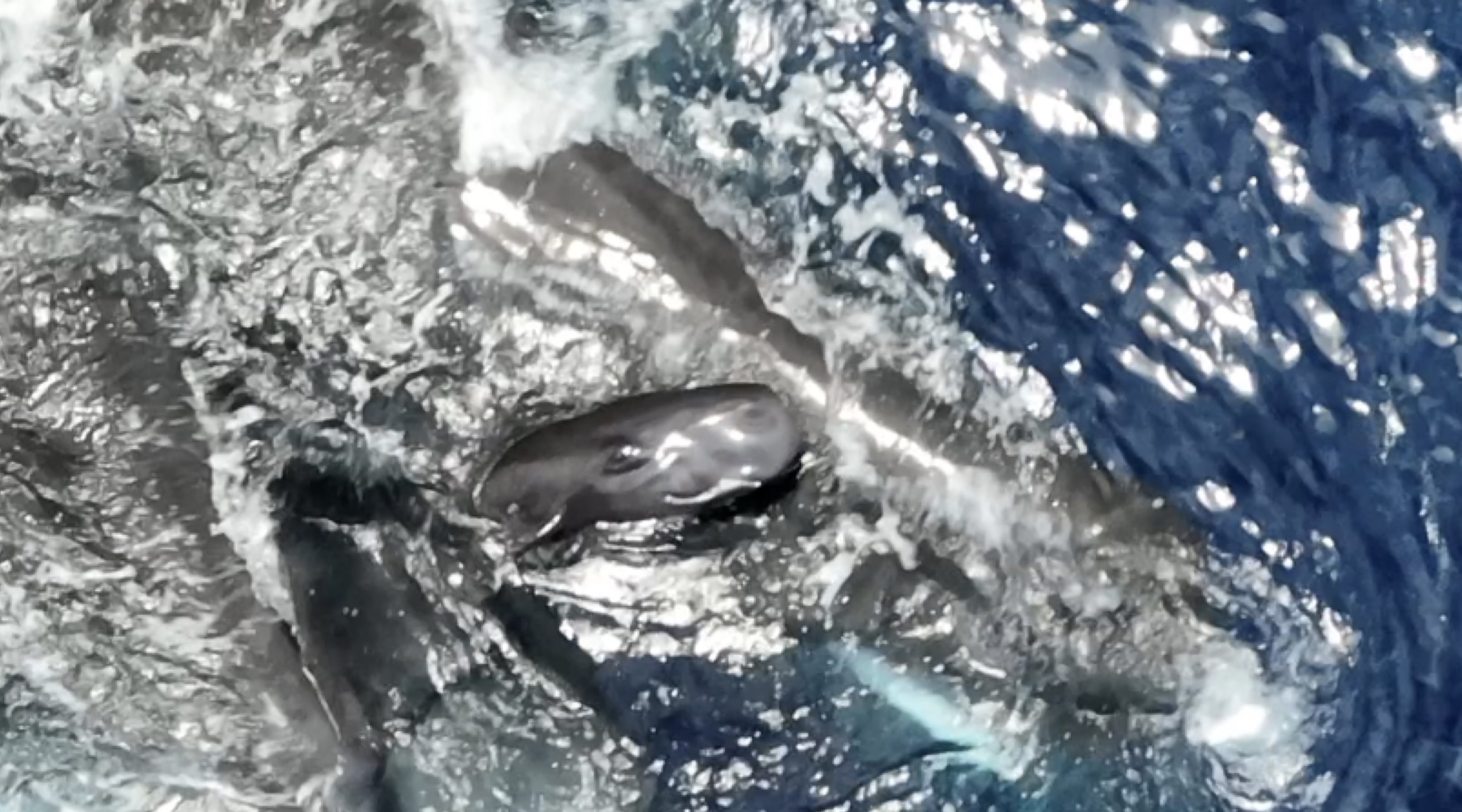
    We quantitatively document a sperm whale birth event, revealing collective support behaviors across kinship lines. Using high-resolution drone footage, computer vision, and multiscale network analysis, we studied the interactions within a Caribbean sperm whale unit comprising two matrilines. Our results suggest that a female family member led birth assistance and that after delivery, all individuals oriented toward and helped lift the newborn, taking turns in a coordinated, cross-kin effort. Despite historically observed foraging segregation, kinship barriers dissolved as all unit members contributed. These analyses provide evidence of birth attendance, or assistance, in a nonprimate species, a behavior long considered characteristic only of humans and their close relatives.

    Project CETIRUNES

  • Nurisso, M. et al. 2026

    Nurisso, M., Fernando, J., Deshpande, R., Perotti, A., Marjieh, R., Frankland, S. M., Lewis, R. L., Webb, T. W., Campbell, D., Vaccarino, F., Cohen, J. D., Petri, G.

    ICLR

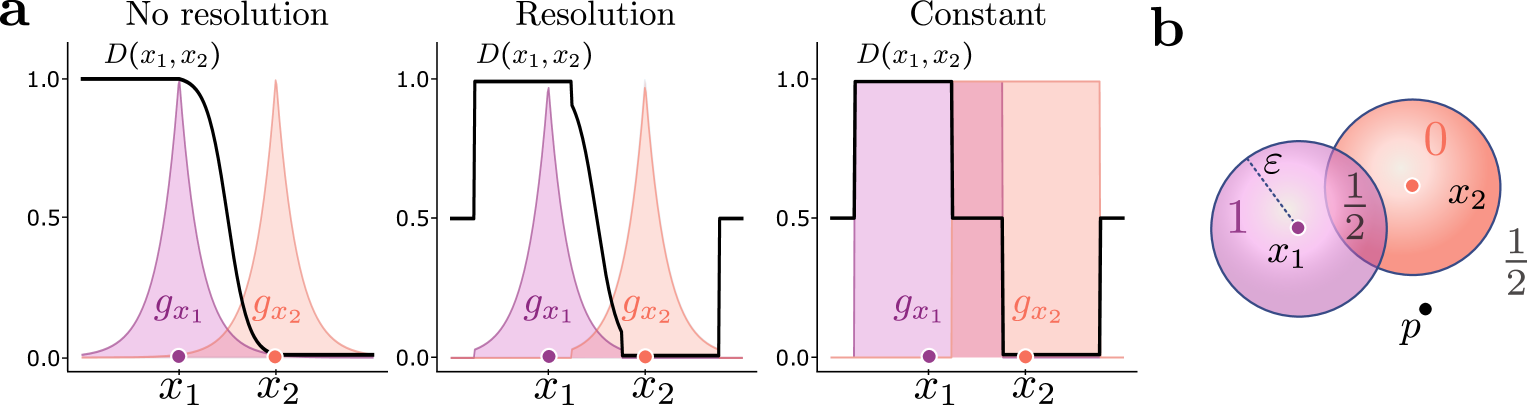
    Intelligent systems must deploy internal representations that are simultaneously structured — to support broad generalization — and selective — to preserve input identity. For any model whose representational similarity between inputs decays with finite semantic resolution, we derive closed-form expressions that pin its probability of correct generalization and identification to a universal Pareto front independent of input space geometry. A minimal ReLU network trained end-to-end reproduces these laws: during learning a resolution boundary self-organizes and empirical trajectories closely follow theoretical curves. The same limits persist in two markedly more complex settings — a convolutional neural network and state-of-the-art vision-language models — confirming that finite-resolution similarity is a fundamental emergent informational constraint.

    Cognitive and NeuroAIRUNES

  • Zaffina, L. et al. 2026

    Zaffina, L., Monti, C., Poetto, S., Lucas, M., Machado Borges, H. J., Deshpande, R., Tonnesen, P., Gruber, D., Gero, S., Santoro, A., Petri, G.

    bioRxiv

    Predators searching patchy environments must coordinate movements across scales, yet this behavioural hierarchy is not yet technically possible to observe in the deep ocean. Here we show that sperm-whale foraging is organized across two nested levels: directionally persistent search paths and flexible prey-capture tactics. We combine acoustic recordings with reconstructed three-dimensional trajectories from 34 sensor-tag deployments on 20 individual whales in both the eastern Caribbean and the mid-Atlantic. Complete foraging paths exhibit heavy-tailed step lengths and superdiffusive displacement, consistent with Levy-like search. Within these paths, echolocation buzzes resolve into two recurrent acoustic-kinematic tactics, and every sampled whale used both, switching between them within dives. Together, these results reveal a foraging hierarchy in which flexible capture actions unfold within persistent, deliberate large-scale search.

    Project CETIRUNES

  • Aluma, Y. et al. 2026

    Aluma, Y., Baron, Z., Barrett, R., Baumgartner, C., Beguš, G., Bhattacharya, S., Bronstein, M. M., Dahan, S., Davis, O., de Haas, S., Defoe, J., DelPreto, J., Dessi, R., Diamant, R., Gatesy, J., George, K., Gero, S., Gibbons, D., Gibbons, D., Gil, S., Goldwasser, S., Gruber, D. F., Harve, O., Hernandez, A., Ishay, M., Jadhav, N., KC, L., Kenny, A., Leitao, A., Lucas, M., Maalouf, A., Malkin, P., Mevorach, Y., Pagani, S., Paradise, O., Petri, G., Poetto, S., Rossi, E., Rus, D., Salino-Hugg, M., Santoro, A., Sharma, P., Tchernov, D., Torralba, A., Tønnesen, P., Vogt, D. M., Wood, R. J.

    Scientific Reports

    Wild cetacean birth observations are extremely rare, with observations having been recorded in less than 10% of cetacean species. Here, we describe a detailed accounting of a sperm whale (Physeter macrocephalus) birth off the coast of Dominica within a well-documented social unit and consisted of sperm whales collaboratively lifting the newborn out of the water. We recorded data via multiple concurrent methods: underwater audio, aerial drone video, shipboard photography in addition to behavioral observations spanning before, during and after the whale birth. All 11 members from sperm whale “Unit A” were present and participated in the birth, which lasted 34 min from the time the flukes emerged until the completion of delivery. The sperm whale unit made extensive vocalizations, with statistically significant shifts in coda vocal style corresponding to key events, such as the beginning of the birth and interactions with short-finned pilot whales (Globicephala macrorhynchus) shortly after the birth event. An evolutionary analysis of wild cetacean births suggests that newborns being lifted out of the water dates to before the most recent common ancestor of toothed and baleen whales, >36 million years ago, and that cooperative lifting of the newborn is noted, thus far, only in members of Odontoceti (toothed whales). This study provides the most in-depth observations of a wild cetacean birth.

    Project CETIRUNES
  • Savietto, D. et al. 2026

    Savietto, D., Campbell, D., Panisson, A., Nurisso, M., Petri, G., Cohen, J. D., Perotti, A.

    ICML

    We analyze the representational geometry of open-weight vision-language models to understand their failures in multi-object tasks such as hallucinating non-existent elements or failing to identify the most similar objects among distractions. By distilling concept vectors and validating them through steering interventions, we show that geometric overlap between these vectors strongly correlates with specific error patterns.

    Cognitive and NeuroAIRUNES

  • Abiad, A. et al. 2026

    Abiad, A., Arenas, A., Backhausz, A., Balogh, J., Banerji, C. R. S., Barbarossa, S., Bianconi, G., Bick, C., Botnan, M. B. B., Carletti, T., Cavallaro, L., Civilini, A., Eliassi-Rad, T., Gong, X., Guo, K., Harrington, H., Jost, J., Krapivsky, P. L., Liò, P., MacArthur, B., Mattsson, C., Mediano, P., Millán, A. P., Mulas, R., Patania, A., Petri, G., Rathilal, C., Sanchez Garcia, R. J., Scolamiero, M., Schaub, M. T., Sun, H., Tian, Y., Vaccarino, F., Xia, K.

    Journal of Physics: Complexity

    Higher-order interactions are increasingly being recognised as fundamental to understanding complex systems. Rather than traditional graphs encoding only pairwise connections, hypergraphs and simplicial complexes provide mathematical frameworks for modeling these multi-way interactions. This paper surveys current research while identifying open questions in spectral theory, topology, and network dynamics, proposing future directions across machine learning, neuroscience, and social sciences applications.

    Network FoundationsRUNES

  • Santoro, A. et al. 2026

    Santoro, A., Neri, M., Poetto, S., Orsenigo, D., Diano, M., Gatica, M., Petri, G.

    Nature Communications

    We present the first large-scale comparison of higher-order interaction (HOI) metrics — spanning information theory and topology — applied to resting-state and task fMRI data from 100 Human Connectome Project subjects. We identify three distinct classes of HOI metrics: redundant, synergistic, and topological, with the latter bridging the two. Despite their differences, all metrics align with the brain's unimodal-to-transmodal hierarchy and, in some cases, with receptor architecture. HOI metrics outperform classical functional connectivity in fingerprinting and are more predictive of behavior, positioning them as key tools for linking brain architecture and cognition.

    Topological NeuroscienceNetwork FoundationsRUNES

  • Santoro, A. et al. 2025

    Santoro, A., Nurisso, M., Petri, G.

    EUSIPCO

    We propose edge-based Laplacian operators for processing brain signals, moving beyond traditional node-centric approaches to capture higher-order topological features of brain functional data.

    Topological NeuroscienceNetwork FoundationsRUNES

  • Robiglio, T. et al. 2025

    Robiglio, T., Di Gaetano, L., Altieri, A., Petri, G., Battiston, F.

    Physical Review E

    We introduce and study a higher-order Ising model defined on hypergraphs, extending the classical pairwise Ising model to capture multi-body interactions and analyzing the resulting phase transitions and critical behavior.

    Network FoundationsRUNES

  • Skardal, P. S. et al. 2025

    Skardal, P. S., Battiston, F., Lucas, M., Mizuhara, M. S., Petri, G., Zhang, Y.

    arXiv

    Understanding how higher-order interactions affect collective behavior is a central problem in nonlinear dynamics and complex systems. Most works have focused on a single higher-order coupling function, neglecting other viable choices. Here we study coupled oscillators with dyadic and three different types of higher-order couplings. By analyzing the stability of different twisted states on rings, we show that many states are stable only for certain combinations of higher-order couplings, and thus the full range of system dynamics cannot be observed unless all types of higher-order couplings are simultaneously considered.

    RUNESNetwork Foundations

  • Orsenigo, D. et al. 2025

    Orsenigo, D., Setti, F., Pagani, M., Petri, G., Luppi, A., Tamietto, M., Ricciardi, E.

    bioRxiv

    We show that while the brain's large-scale functional architecture is shaped by innate hierarchical gradients, sensory deprivation induces targeted, experience-driven reorganization that flexibly reconfigures cortical connectivity without disrupting the brain's core scaffold. This work demonstrates how congenital sensory deprivation leads to specific adaptations in brain networks while preserving fundamental organizational principles.

    Topological NeuroscienceRUNES

  • Poetto, S. et al. 2025

    Poetto, S., Merritt, H., Santoro, A., Rabuffo, G., Battaglia, D., Vaccarino, F., Saggar, M., Brovelli, A., Petri, G.

    bioRxiv

    We show that topological fingerprinting, based on homological scaffolds, significantly outperforms FC-based one. We also show that these scaffolds are distributed across functional subnetworks and we link the structure of topological cycles to information synergy.

    Topological NeuroscienceNetwork FoundationsRUNES

  • Gatica, M. et al. 2025

    Gatica, M., Atkinson-Clement, C., Coronel-Oliveros, C., Alkhawashki, M., Mediano, P.A.M. , Tagliazucchi, E., Rosas, F.E., Kaiser, M., Petri, G.

    PLoS Computational Biology

    Transcranial ultrasound stimulation (TUS) is an emerging non-invasive neuromodulation technique, offering a potential alternative to pharmacological treatments for psychiatric and neurological disorders. While functional analysis has been instrumental in characterizing TUS effects, understanding the underlying mechanisms remains a challenge. Here, we developed a whole-brain model to represent functional changes as measured by fMRI, enabling us to investigate how TUS-induced effects propagate throughout the brain with increasing stimulus intensity. We implemented two mechanisms: one based on anatomical distance and another on broadcasting dynamics, to explore plasticity-driven changes in specific brain regions. Finally, we highlighted the role of higher-order functional interactions in localizing spatial effects of off-line TUS at two target areas—the right thalamus and inferior frontal cortex—revealing distinct patterns of functional reorganization. This work lays the foundation for mechanistic insights and predictive models of TUS, advancing its potential clinical applications.

    Topological NeuroscienceNetwork FoundationsRUNES

Tools & data